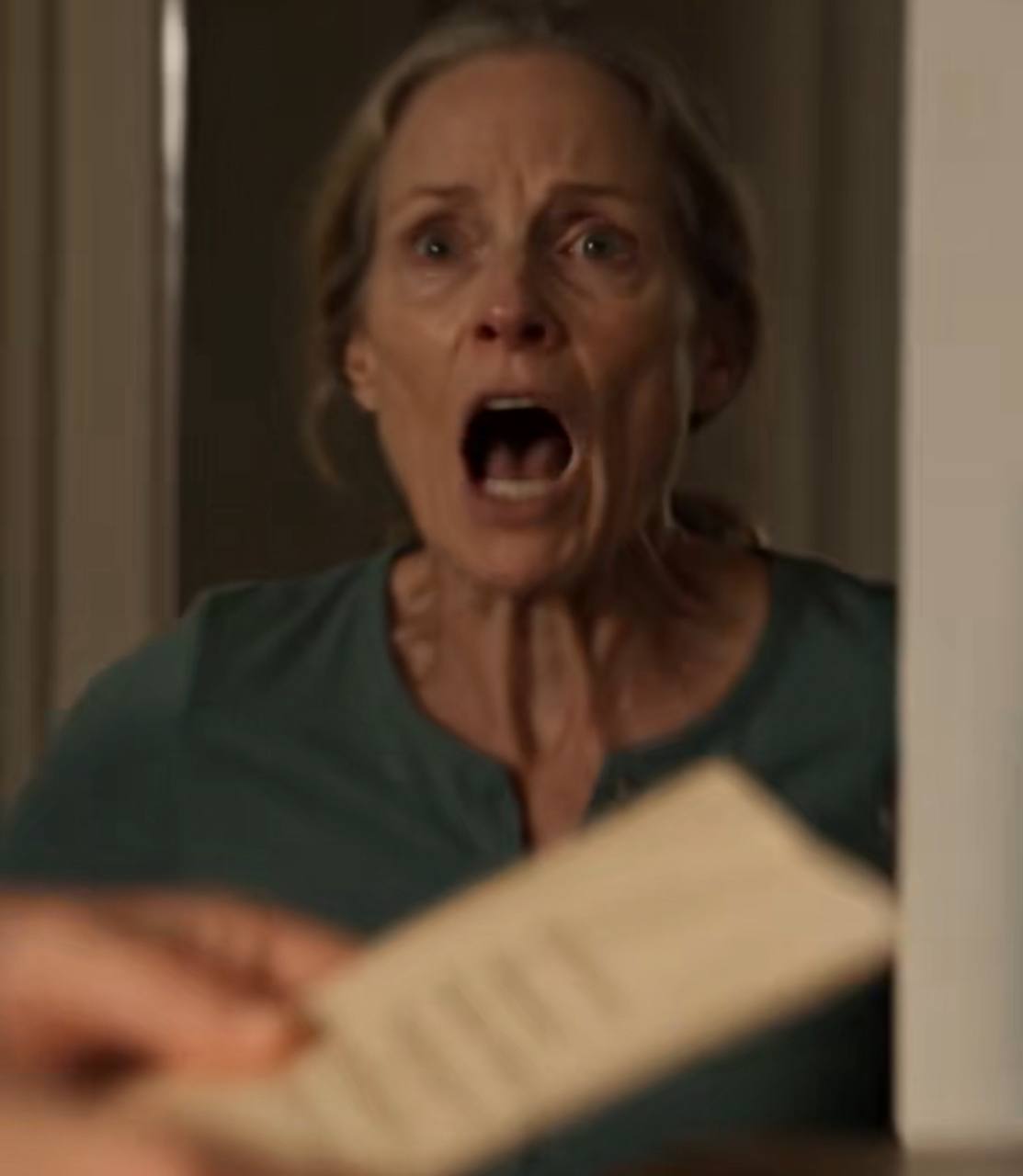
“Stop! Don’t open that letter!”
Emily froze.
The old envelope was already in her hands, its yellowed paper soft beneath her fingers. She had found it exactly where her father said it would be—in the bottom drawer of his desk, beneath a stack of unpaid bills and an old family photo.
Her mother, Margaret, sat in the doorway in her wheelchair, one hand gripping the wheel so tightly that her knuckles had turned white.
Emily had never seen her look so afraid.
“But Dad told me to read it when I turned eighteen,” Emily said. “That’s today.”
Margaret rolled closer. Her breathing was shallow, and her eyes never left the envelope.
“Please, sweetheart,” she whispered. “I’m begging you. Don’t read it.”
For a moment, neither of them moved.
Six months had passed since Emily’s father died. Since then, the house had become painfully quiet. His shoes still sat beside the door. His coffee mug remained in the kitchen cupboard. Sometimes Emily opened it just to see the small chip in its handle.
Before his final trip to the hospital, he had taken her hand and given her one strange instruction.
“When you turn eighteen, look in the bottom drawer of my desk. There’s a letter for you.”
He had made her promise not to open it early.
Now the day had arrived, and her mother was asking her to break the final promise she had made to him.
“Why?” Emily asked. “What’s in it?”
Margaret lowered her eyes.
“Something I should have told you myself.”
Emily felt her stomach tighten.
“Then tell me now.”
Her mother opened her mouth, but no words came.
That silence frightened Emily more than any answer could have.
She slowly unfolded the letter.
Margaret covered her face and began to cry.
The first line was written in her father’s familiar handwriting.
“My dearest Emily, if you are reading this, you are eighteen years old—and you deserve the truth about the woman you call Mom.”
Emily glanced toward Margaret.
“What does that mean?”
“Please,” Margaret said through her tears. “Let me explain before you continue.”
But Emily kept reading.
Her father wrote that Margaret had not given birth to her.
Emily’s biological mother was Margaret’s younger sister, Anna.
Anna had been only nineteen when she became pregnant. The baby’s father disappeared as soon as he learned about the pregnancy. Anna had no money, no stable home, and no one she trusted except her older sister.
Margaret and her husband had tried for years to have a child. When Anna asked them to adopt the baby, they agreed—but only after Anna insisted that Emily be raised as their daughter in every sense of the word.
Three days after Emily was born, Anna disappeared.
For eighteen years, she had never returned.
Emily lowered the letter. Her hands were trembling.
“So you’re not my mother?”
Margaret flinched as though the words had struck her.
“Not by blood,” she whispered.
Emily stood up and stepped away from her.
Every childhood memory suddenly felt uncertain. The bedtime stories, the birthday cakes, the family photographs—all of them now seemed to hide something.
“You lied to me my entire life.”
“I was afraid,” Margaret said. “At first, we thought you were too young to understand. Then every year, telling you became harder.”
“That wasn’t your decision to make.”
“No,” Margaret admitted. “It wasn’t.”
Emily looked back at the letter.
There was more.
Her father wrote that when Emily was five, Anna contacted them for the first time. She wanted her daughter back.
Margaret and her husband agreed to meet her.
Anna arrived two hours late, asked for money, and admitted that she had nowhere for Emily to live. She promised she would return when her life was stable.
She never did.
Emily’s eyes filled with tears.
“Did she ever try again?”
Margaret shook her head.
“Not after that day.”
“Is she alive?”
“Yes.”
“Do you know where she is?”
Another long silence followed.
Emily looked at her mother in disbelief.
“You do.”
Margaret wiped her cheeks.
“She lives about forty minutes from here.”
The room seemed to tilt beneath Emily’s feet.
Forty minutes.
Her biological mother had lived less than an hour away while Emily grew up believing she had no other mother.
“Why didn’t she come for me?”
“I don’t know,” Margaret answered. “And I couldn’t bear to let you grow up wondering why you weren’t enough for her.”
“So you decided to hide her?”
“I decided to protect you.”
“You protected yourself,” Emily said. “You were afraid I would choose her.”
Margaret did not defend herself.
“Yes,” she whispered. “I was.”
Emily looked down at the final page of her father’s letter.
His last words were different from everything that came before.
“Emily, your mother made mistakes because she was afraid of losing you. Fear can make good people choose silence when they should choose honesty. You have every right to be angry with us.
“But before you decide who your mother is, remember this:
“Blood explains where your life began. It does not tell the story of who stayed.
“When you had nightmares, Margaret sat beside your bed until morning. When you were seven and ran into the street after your ball, she pushed you out of the way of a moving car. That accident is why she has used a wheelchair ever since.
“She never told you because she did not want your love to become gratitude.
“She wanted you to love her freely.
“Whatever you decide after reading this, do not mistake an imperfect decision for an absence of love.”
Emily stopped reading.
Her eyes slowly moved toward the wheelchair.
She had always been told that the accident happened while her mother was crossing the street alone. Margaret had never mentioned that Emily was there.
“You lost the use of your legs because of me?”
“No,” Margaret said firmly. “Because of a car accident.”
“You saved me.”
“I did what any mother would have done.”
Emily stared at the woman in front of her.
For eighteen years, Margaret had helped her dress, packed her lunches, stayed awake when she was sick, listened to stories about school, celebrated every small victory, and forgiven every angry word.
She had done all of it without expecting Emily to know what she had sacrificed.
But the truth still hurt.
“You should have told me,” Emily said.
“I know.”
“I might need time.”
“I know that too.”
“And I may want to meet Anna.”
Margaret’s face tightened with fear, but she nodded.
“If that is what you want, I’ll help you find her.”
Emily folded the letter and placed it on the desk.
Then she knelt in front of her mother’s wheelchair.
Margaret looked away, as though preparing herself to be rejected.
Emily did not hug her immediately.
First, she said the words they both needed to hear.
“You were wrong to hide the truth from me.”
Margaret nodded as tears ran down her face.
“But the truth doesn’t erase eighteen years,” Emily continued. “And meeting the woman who gave birth to me won’t erase the woman who raised me.”
Margaret finally looked at her.
“You’re still my mother,” Emily said. “I just need you to trust me with the truth from now on.”
Margaret reached for her daughter’s hand.
“No more secrets,” she promised.
Emily squeezed it.
Weeks later, Emily met Anna in a small café.
She had imagined anger, explanations, and perhaps a miraculous connection. Instead, she found a nervous woman carrying years of regret.
Anna apologized. She admitted that fear, addiction, and shame had controlled most of her life. She did not ask Emily to call her Mom. She only asked for the chance to know her.
Emily agreed—but slowly and with boundaries.
When she returned home, Margaret was waiting in the living room. She did not ask whether Emily loved Anna. She did not ask whom Emily had chosen.
She asked only one question.
“Are you okay?”
Emily placed her bag down, walked across the room, and hugged her.
“I think I will be.”
The letter did not destroy their family.
The secret almost did.
Because love can survive a painful truth, but trust struggles to survive years of silence.
Family is not defined by a single name, a shared face, or the blood running through our veins. It is built in ordinary moments—in the people who stay awake when we are sick, stand beside us when life becomes difficult, and love us even when they are afraid we may leave.
Margaret had not given Emily life.
She had given eighteen years of her own life to raising her.
And on her eighteenth birthday, Emily finally understood the difference between the woman who brought her into the world and the woman who made that world feel like home.